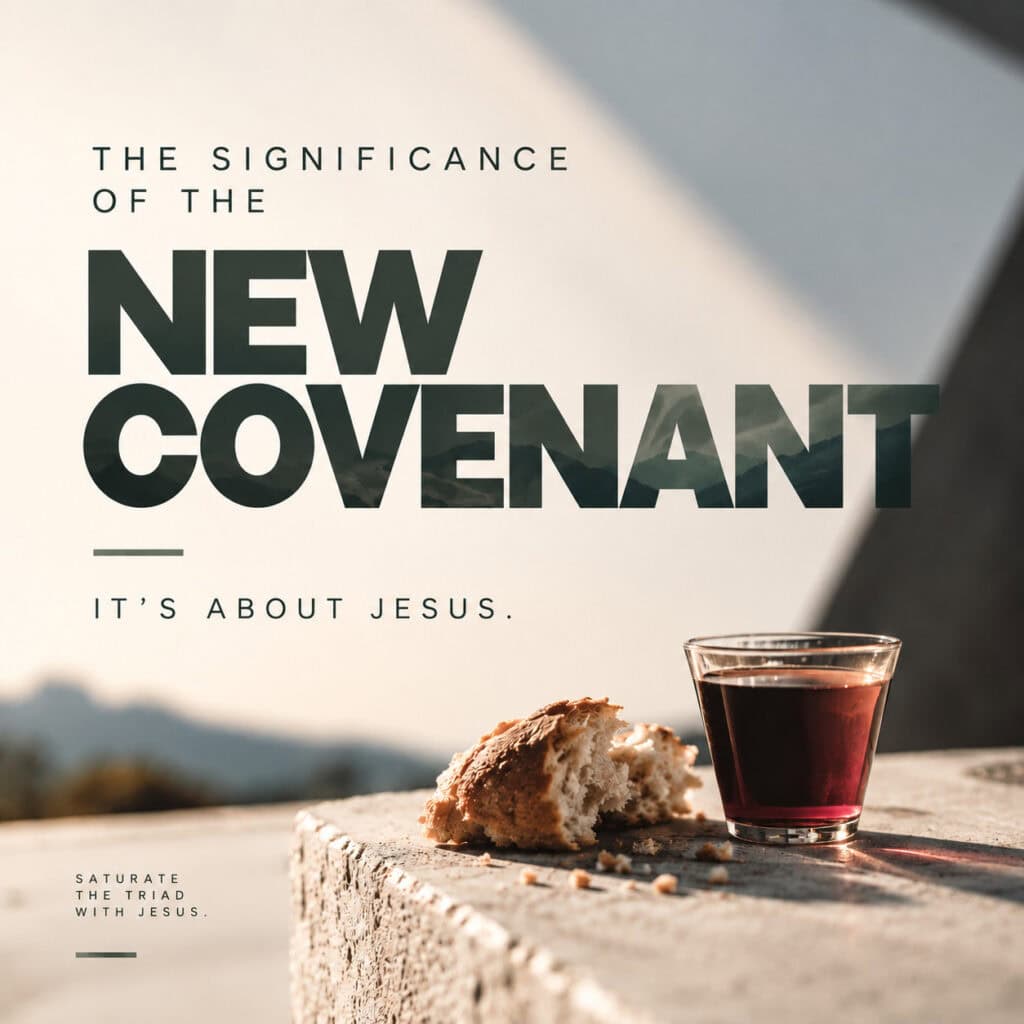
In Mark 14, Jesus is eating the Passover meal with His disciples when He takes the cup and says, “This is My blood of the new covenant, which is shed for many” (Mark 14:24).
We often read right past it, but what Jesus said was huge. For about 1,500 years, Israel had lived under the covenant God established through Moses. Now Jesus was announcing that something new was beginning.
To understand why that matters, we first have to understand the Old Covenant. After God delivered Israel out of Egypt, He brought them to Mount Sinai and gave them the Law. Then in Exodus 24, Israel agreed to the terms of the covenant:
“All the words which the Lord has said we will do.” — Exodus 24:3
A few verses later, they said it again:
“All that the Lord has said we will do, and be obedient.” — Exodus 24:7
The covenant was then sealed with blood. Israel was essentially saying, “God, whatever You tell us to do, we’ll do it.”
The problem was they couldn’t.
It wasn’t long before the same people who promised to obey God were worshiping a golden calf. The problem wasn’t the Law. The Law was holy and good. The problem was that it could tell people what was right, but it couldn’t change the human heart.
That’s why Jeremiah prophesied about a day when God would establish something new:
Jeremiah 31:31–33 (NKJV) — “Behold, the days are coming, says the LORD, when I will make a new covenant with the house of Israel and with the house of Judah—not according to the covenant that I made with their fathers… My covenant which they broke… But this is the covenant that I will make… I will put My law in their minds, and write it on their hearts.”
God was saying that a day was coming when He was going to do something different. Instead of simply giving commands from the outside, God was going to change people from the inside.
But God had actually given us a picture of this hundreds of years earlier with Abraham.
In Genesis 15, Abram divided animals in preparation for making covenant with God. In that culture, the people making covenant would walk between the pieces, taking responsibility for keeping their agreement.
But Abram fell asleep so God alone passed between the pieces as a smoking oven and a burning torch. This means Abram didn’t make a covenant with God. God made a covenant with Abram and took responsibility for fulfilling it. Abram’s part was simply to believe Him. That was a picture of something much greater that was coming.
The New Covenant isn’t ultimately based on our ability to keep our promises to God. It’s based on Jesus. The covenant is between God and Jesus, and we get in on the benefits of that covenant by putting our faith in Him.
That’s what makes what happened in Mark 14 so powerful. Jesus knew Judas was going to betray Him. He knew Peter was going to deny Him, and He knew the rest of the disciples were going to scatter. None of it caught Jesus by surprise.
Yet knowing all of that, Jesus still took the bread and the cup and gave it to them. Mark even makes a point of telling us that they all drank from the same cup.
The New Covenant wasn’t offered to people who had proven their faithfulness. It was offered to people who desperately needed His.
That’s important because we often approach God based on our performance. When things are going well, we feel confident with God. When we mess up, we pull away from Him. We start thinking we need to do better, pray more, read our Bible more, or somehow get ourselves back into a place where God will accept us again.
But that’s Old Covenant thinking. Our relationship with God isn’t built on our ability to keep our promises to Him. It’s built on Jesus keeping His promise for us.
Israel promised God they would obey and failed. Peter promised Jesus he would never deny Him and failed. But Jesus went to the cross and finished what He came to do. That’s why His words, “It is finished,” matter so much.
The New Covenant means we can stop relating to God based on how well we think we’re doing and start relating to Him based on what Jesus has done. That doesn’t make obedience unimportant. It actually puts obedience in its proper place. We aren’t obeying God to get Him to love us, accept us, or bless us. We obey because of what He has already done in us and for us.
That’s why communion is so important. Communion isn’t a time to make another promise to God that we’re going to do better, and it’s not a time to sit around remembering everything we’ve done wrong. Jesus told us what we’re supposed to remember: Him.
Paul writes in 1 Corinthians 11:23–26:
“The Lord Jesus on the same night in which He was betrayed took bread; and when He had given thanks, He broke it and said, ‘Take, eat; this is My body which is broken for you; do this in remembrance of Me.’ In the same manner He also took the cup after supper, saying, ‘This cup is the new covenant in My blood. This do, as often as you drink it, in remembrance of Me.’ For as often as you eat this bread and drink this cup, you proclaim the Lord’s death till He comes.”
Jesus said, “Do this in remembrance of Me.” Not in remembrance of your sin. Not in remembrance of how badly you messed up last week. Communion is about remembering Jesus and what He accomplished for us.
The bread reminds us that His body was given for us. The cup reminds us that His blood established the New Covenant. We remember that Jesus dealt with sin, that the price has been paid, and that our relationship with God is now based on what He did, not what we do.
That’s the good news of the New Covenant. We don’t come to the table focused on our failure. We come focused on His faithfulness.
Jesus did the work. Our part is to believe it, receive it, and live from what He has already finished.
That’s the significance of the New Covenant.